2. Side view
The side view is the view of a part from one of its sides, usually from the left.
The side view mainly shows the height and depth of the part, but it does not show its width.
The side view can be a left or right side view, depending on which side of the part we are viewing it from.
Examples
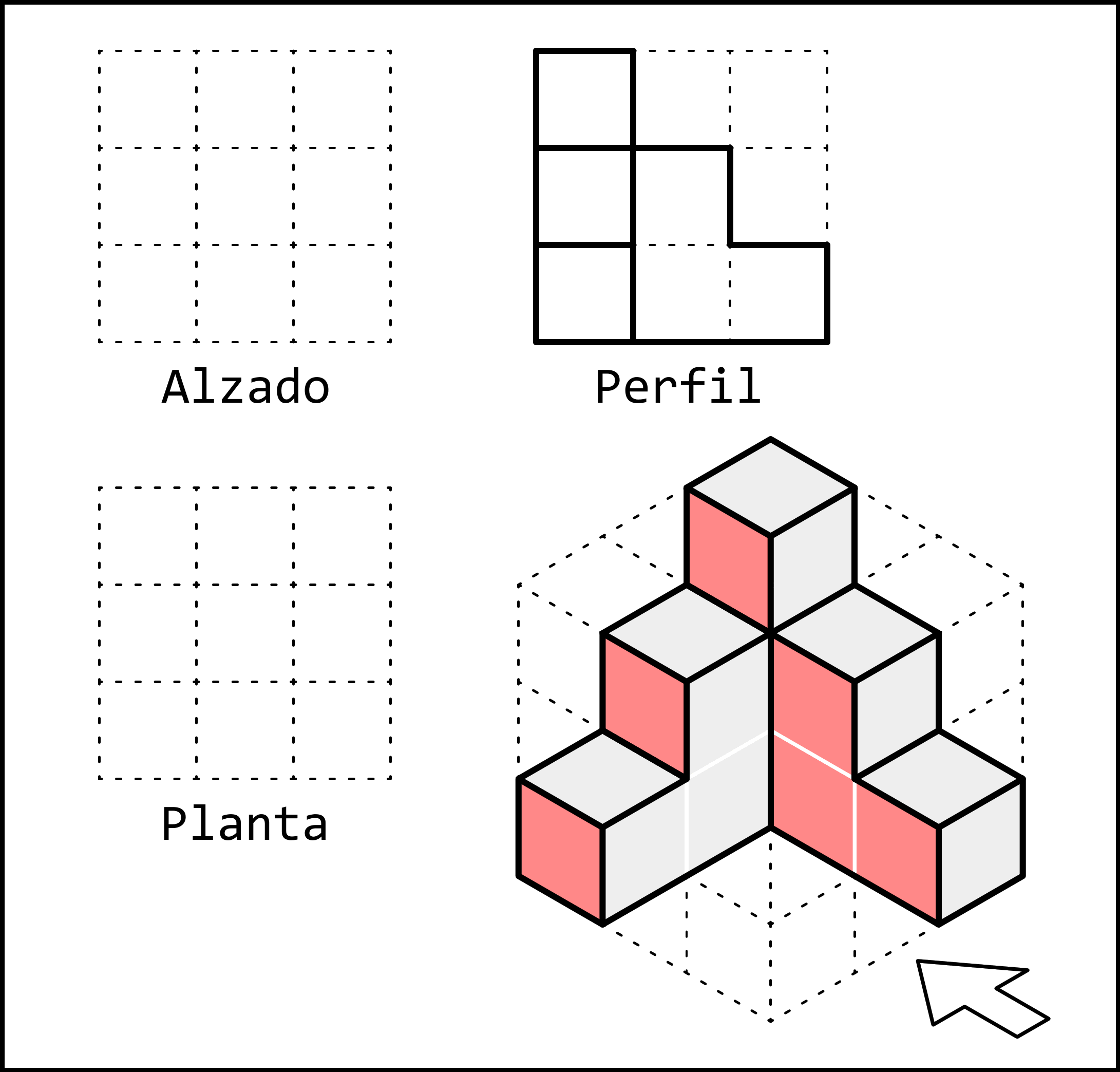
In the following examples, the different faces of the three-dimensional part that can be seen from the direction of the side view are shown in red.
The edges that form the side view are also shown. These are the lines that we need to draw in the view.
The side view should not be colored or filled with gray: only the visible edges are represented using thick continuous lines.
In this part, two rectangles can be seen from the direction of the side view. Both have a depth of 3 units: the lower rectangle has a height of 1 unit, while the upper one has a height of 2 units. With these measurements, it is easy to draw the side view.
Although the two shapes are separated in the direction of the width, this dimension is not represented in the side view. Therefore, in this view they appear one above the other, without showing the distance between them in the direction of the width.
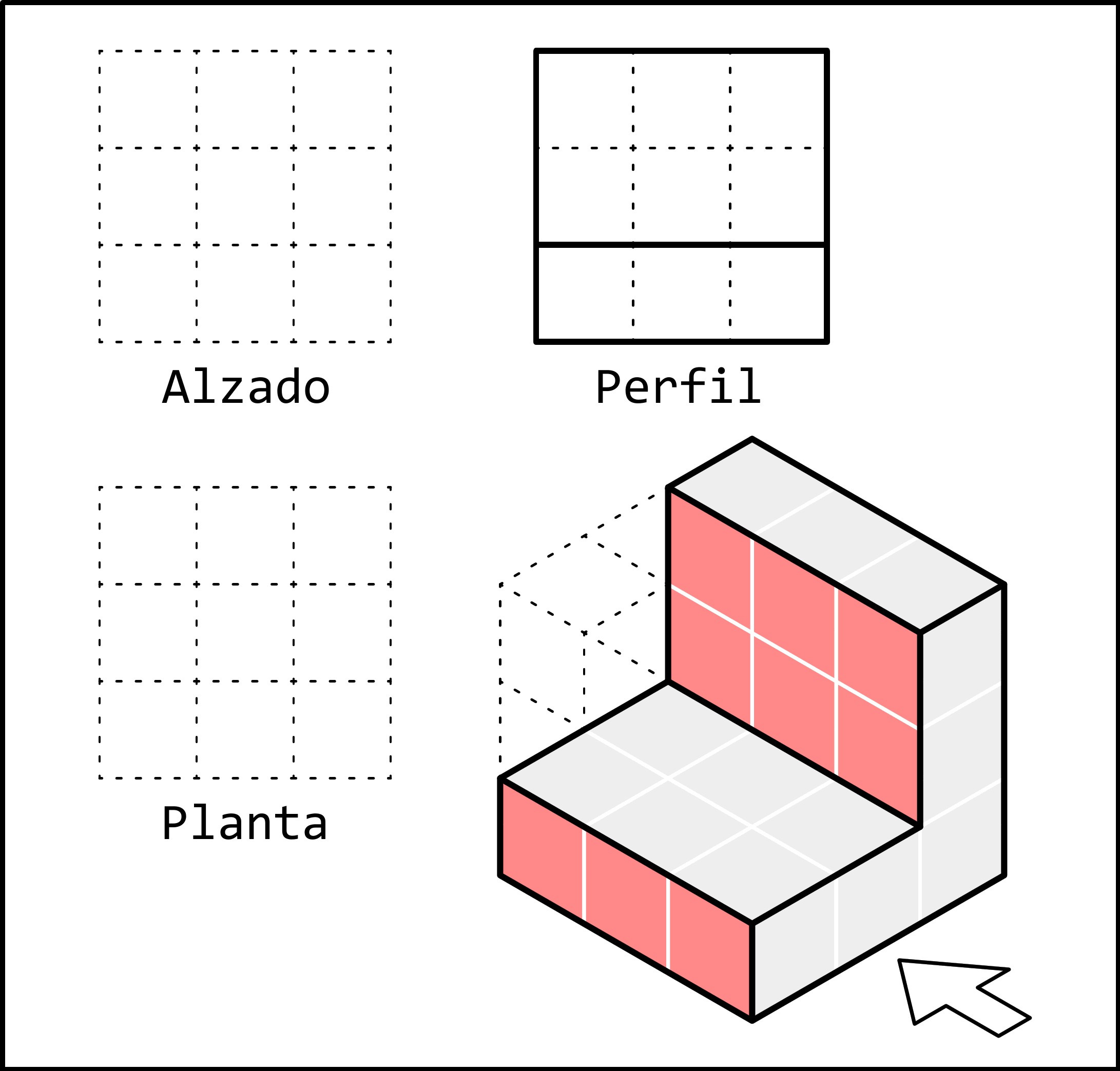
In this part, the side view shows an L shape extending to the right, with a rectangle 2 units deep positioned above the L shape.
As before, both appear together, without showing the distance between them.
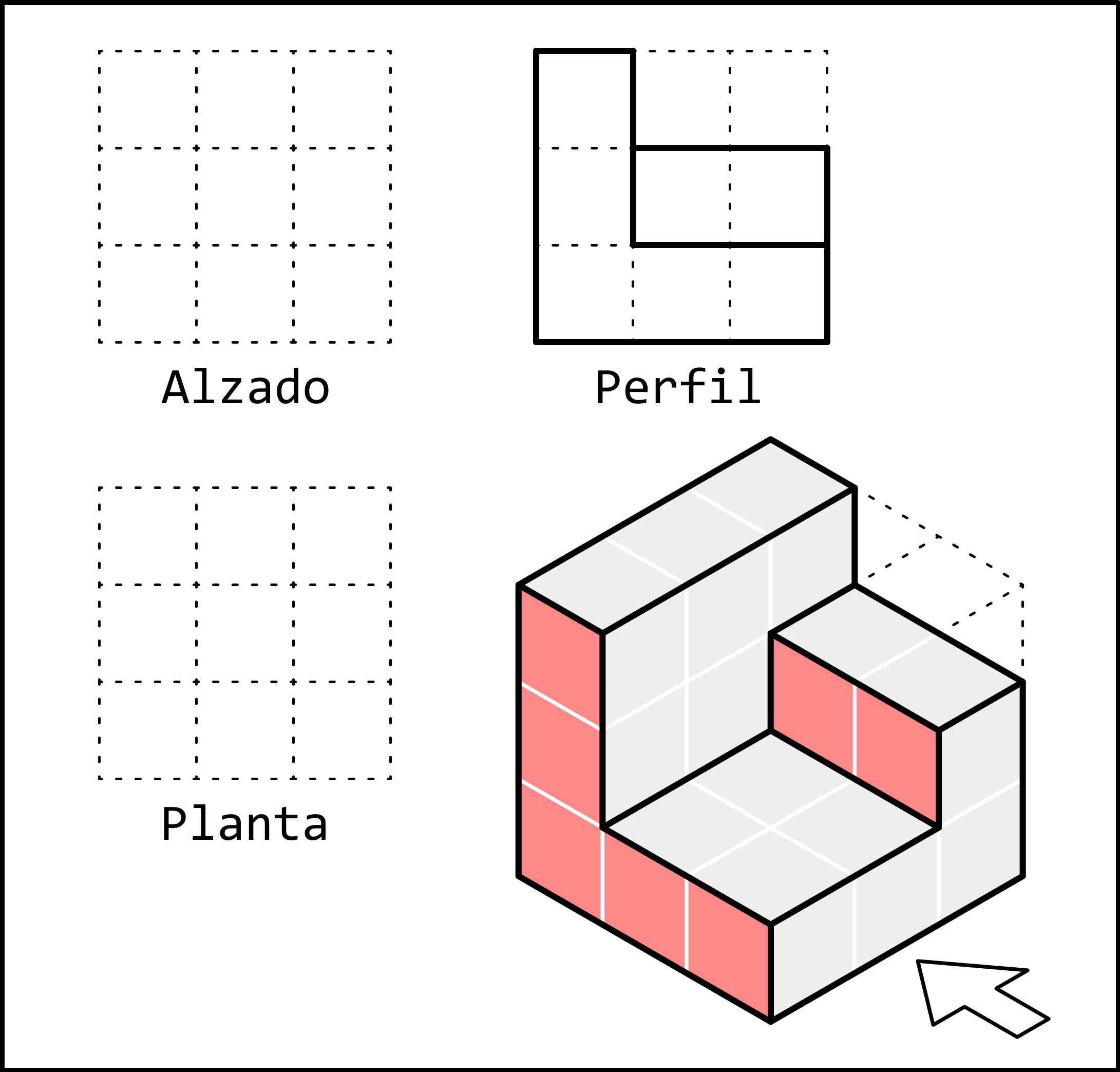
In this part, we can see three different shapes. To draw them correctly, we must pay attention both to their size (height and depth) and to their position (height and depth).
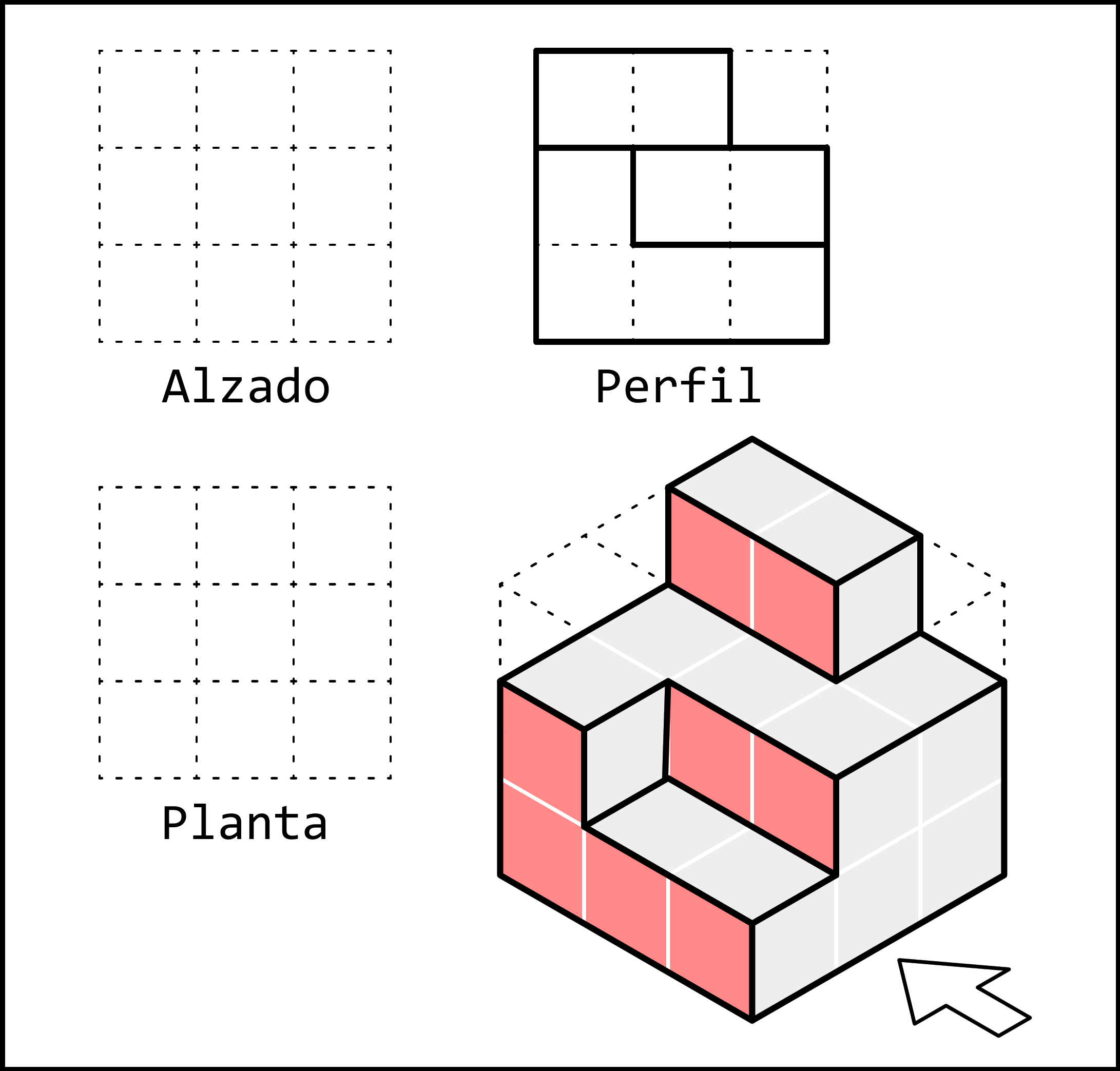
This part consists of two staircases. The areas shaded in gray represent the parts of the object that can be seen from the side view. In the side view, the shapes appear without separation in the direction of the width, as we have already seen with other shapes.